Monday, September 18, 2017

A King Wants What A King Wants

A King wants what a King wants: it's good to be the King!


Once he'd decided to marry Anne Boleyn, nothing could stop King Henry VIII from doing what had to be done.

Not the Pope; Not the Nobles; Not his Trusted Advisors; Not the Queen.

He was determined to do whatever it took in order to get what he wanted: to divorce his wife of twenty years, to marry Anne Boleyn and to have her crowned his Queen.


(By the way, Queen Anne Boleyn was our 2nd cousin, 15x removed.)

In March 1534, Pope Clement VII announced that Henry's marriage to Anne Boleyn was invalid. 

So began Henry's "reign of terror" against anyone who opposed him. 

He first declared that the Pope no longer had authority in England. 

In November 1534, Parliament passed the Act of Supremacy. This gave Henry the title of the "Supreme Head of the Church of England".  


One important point to note is that the Act effectively made it treasonable to support the authority of the Pope over the Church of England. By tying the church and monarch so closely together, support for Catholicism became not simply a statement of personal religious conviction, but a repudiation of the authority of the monarch, and as such, an act of treason - punishable by death.

All English subjects were ordered to take an oath accepting this.


Catholics who still held the Pope as the supreme head of the church and refused to swear this oath, were indicted for treason.

Between 1534 and 1540, the king's terror did rage and the list of his victims is long: The Carthusians of the Charterhouse of London, executed and starved to death; the Observant Franciscan Friars of Greenwich; St Thomas More and St John Fisher; the rebels from the Pilgrimage of Grace, the abbots of Colchester, Reading, and Glastonbury, Anne Boleyn, the Knights of Malta, Catholic "traitors" and Protestant "heretics"--even Thomas Cromwell, Vice-Regent and Earl of Essex! 

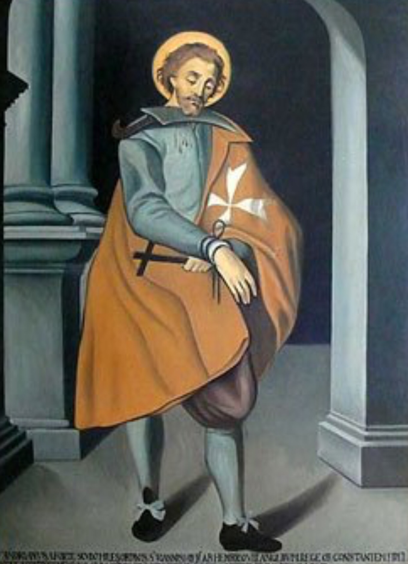
This list also includes our 14th great grandfather: Blessed Adrian Fortescue (1476-1539).

In addition, his mother, Alice, was Anne Boleyn's aunt.

That's right: Queen Anne Boleyn is our 2nd cousin 15x removed!

There is no evidence that Sir Adrian took part in politics or plots of rebellion. He just lived quietly in Devon with his family.  

Regardless, on  July 9, 1539, Sir Adrian Fortescue, Knight of St. John, was beheaded on Tower Hill by order of King Henry VIII. 

In the common pattern of injustice at the time, he was never tried in a Court of Law.

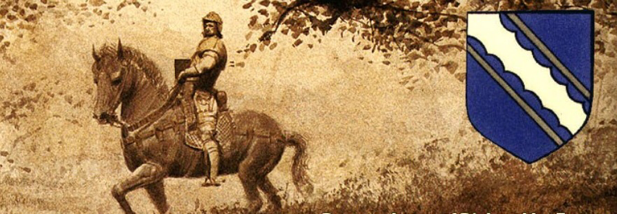
A great Devonshire family, the Fortescues descend from a shield-bearer of William the Conquerer who gave him the surname - le Fort-Escu: "the Strong Shield".

Before these "troubles", Sir Adrian Fortescue had been in very high favor at Henry VIII's Court - 

While he was a student in Oxford, he was attracted by the Dominicans and was enrolled in the Order as a lay member.  

When Henry, then still Prince of Wales, was made a Knight in 1503, a few young gentlemen shared that honor with him; Adrian Fortescue was one of them. 

Frequently seen among the royals at Court, he was appointed Justice of the Peace for Oxford in 1511.

A true country gentleman of the period, Sir Adrian Fortescue followed Henry to Calais in June 1513 in the enterprise against Louis XII of France concerning the region of Milan. 

In July 1517, Sir Adrian and his brother, Sir John, were in the king's retinue at the royal banquet at Greenwich. 

Sir Adrian was a Gentleman of the King's Privy Chamber.

He attended The Field of the Cloth of Gold in 1520 and he was charged with guarding Queen Catherine.


In 1522, he fought under the Earl of Surrey in Picardy. 

In 1523, he took part in the capture of Bray and of Montdidier. 

Despite these activities, he had time to marry Lady Anne Stonor in 1499 and they had two daughters, Margaret and Frances.

On June 14, 1518, his wife Anne died and was buried at Pyrton Church at Shirburn.


But, on March 31, 1525 she was moved to the church at the Priory of Bysham, Berkshire, to be buried among her ancestors. 

In 1538 the Priory was razed by Henry VIII and Sir Adrian removed Anne's remains to Brightwell-Baldwin Church, 2 to 3 miles from Stonor..

By 1528, he had finished his military career and married for the second time to Lady Anne Reade.Together, they had three sons and two more daughters.

Late in life (1532), Sir Adrian became a Knight of St. John of Jerusalem. The Knights loudly opposed the religious errors of the King of England.

Adrian Fortescue thus drew the lightning. 


All the property that the Order had in England had just been seized. 

As a consequence, the members of the Order were not welcome at court. 

Although he held no political office, Adrian was asked to take the Oath of Succession.

When he refused, Sir Adrian was taken to Woodstock where he was questioned. After several days, he was removed to Southwark and held in Marshalsea Prison on August 23, 1534.


The King then gave Stonor Castle, a part of his wife's inheritance, to her brother, Sir Walter Stonor. 


Sir Adrian's imprisonment - uncharged - grew long. No doubt Thomas Cromwell wished to take time to strengthen his power.

He was keeping in check a possible leader of the opposition and of the resistance. 

Then, for no apparent reason, our Knight was released.

This worthy gentleman had been overwhelmed by some unexplained whim of the Tudor tyrant. 

On February 3, 1539, when he refused to take the Oath of Supremacy supporting Henry VIII's separation from Rome, he was arrested a second time and imprisoned in the Tower of London.


On the 18th, an inventory was drawn up of all his real and personal possessions and they were declared seized by the Crown.

There was no trial, or at least no traces of it are to be found. 

To condemn with certainty those whom he wanted to eliminate, Cromwell had revived the Bill of Attainder of 1459 and applied it to the Catholics, "enemies of the throne".Their  property was confiscated to "pay for the insult". 

In April, Adrian was condemned - with no trial but by an act of attainder.

On July 9, 1539, he was beheaded at Tower Hill, London. 


No specific act of treason was ever alleged against him, but only in general "sedition and refusing allegiance". 

The attainder, however, went on to decree death against Cardinal Pole and several others because they "adhered themselves to the Bishop of Rome". Catholic tradition has always held that Sir Adrian died for the same cause, and modern Protestant critics have come to the same conclusion. 

His cultus has always flourished among the Knights of St. John, and he was beatified by Leo XIII in 1895.

Blessed Adrian Fortescue was one of the few virtuous relatives of Anne Boleyn. 


Lady Anne Fortescue was remembered by Queen Mary, who took her into her favor in 1553, after her husband's heresy. She attended the queen on 30th September, and was granted several manors in Gloucestershire, namely Pannington, Gotherington, Tredington, and Washbourne near Tewkesbury, and the Manor of Hamstead near Chipping-Sodbury.

Lady Anne married again - Thomas Ap-Harry or Parry, who died in 1575. She died on 5th January 1585, aged 75, and was buried at Welford, near Newbury, Berkshire. An alabaster monument was erected there by her son Thomas.


UPDATE:

Here is our Family Tree link to Blessed Adrian Fortescue:

Blessed Sir Adrian Fortescue (1476-1539);

His daughter: Margaret Fortescue Wentworth (1502-1545);

Her daughter: Anne Wentworth Poley (1520-1575);

Her daughter: Susanna Poley Crofts (1539-1604);

Her son: Captain Francis Crofts of Lackford (1567-1638);

His son: William Crofts (1606-1663);

His son: George Crofts, Esq of Churchtown (1643-1698);

His daughter: Judith Crofts Freeman (- d 1739);

Her son: John Freeman, Esq of Ballinguile (1678-1741);

His son: John Freeman, Esq of Cahirmee (1713-1776);

His daughter: Ellinor Freeman Milward (1753-);

Her son: John William Milward, Esq (1792-1869);

His son: John Harnett Milward, Esq (1817-1870);

His daughter: Mary Frances Julia Milward Reilly (1855-1904);

Her son: Patrick Henry Reilly, Esq (1886-1960);

His son: Henry James Joseph Reilly (1922-1999);

His daughter: Susan Reilly DeVore

Her son: Reilly James DeVore

EPILOGUE 

History gives a nation its bearing on what it is and how its people are affected by what has happened in the past. 

Its kings and queens, its wars - with victories and defeats - these all mold a nation’s culture into the way it views itself in the present. 

In the same way, a family history presents how a family has survived and come to terms with the great social and cultural experiences of the ages.

We hope these stories will give each member of our family a foundation and, in some small way, explain how we came to be what we are today.

Hopefully, through these vignettes, our future generations will gain a knowledge of the energy and dynamism, the loves and hates, the errors and mistakes, the victories and failures, the struggles and successes that make us what we are.

Our family history presents a fascinating read - and, hopefully, some lessons to be learned in the process.


Sunday, September 10, 2017

Great Rejoicing in Ballyea!


For some members of the Landlord Class in 19th century Ireland, the Encumbered Estates Act of 1849 presented unique opportunities to increase their own estate.

In 1881, the average income from rent was £14 per annum which was a great deal more than the annual income of many other elite groups in Irish society.

For example, a Church of Ireland bishop earned £1,500; a magistrate earned £675; a barrister earned between £800 - £1,000; the Inspector General of the Royal Irish Constabulary earned £1,800.

And, in 1863, our great great grandfather, Patrick Edward Reilly, earned £498 just from his job collecting rents for Col. Francis Macnamara of Ennistymon House. This figure does not include the rents he collected from his own tenants.

At the other end of the social spectrum, a small tenant farmer in county Galway had an annual income of less than £40; a white collar worker at Eason's Department Store in Dublin earned between 7s and £14 per week; a rural, unskilled laborer earned between 5s and 15s per week.

During The Great Famine (1845-1849), many landlords became severely indebted because they were unable to collect rents from their impoverished tenants. This situation compelled  them to sell their estates under the Encumbered Estates Act.

Under the terms of this Act, a creditor could petition for a sale when encumbrances exceeded half of the estate's net rent. 

Consequently, the ownership of about one-quarter of the agricultural property in Ireland was transferred during the thirty years after 1849, most of it in the 1850s.

The losers tended to be the owners of smaller estates while the beneficiaries were investors and wealthier landlords who took the opportunity to further amalgamate their estates.

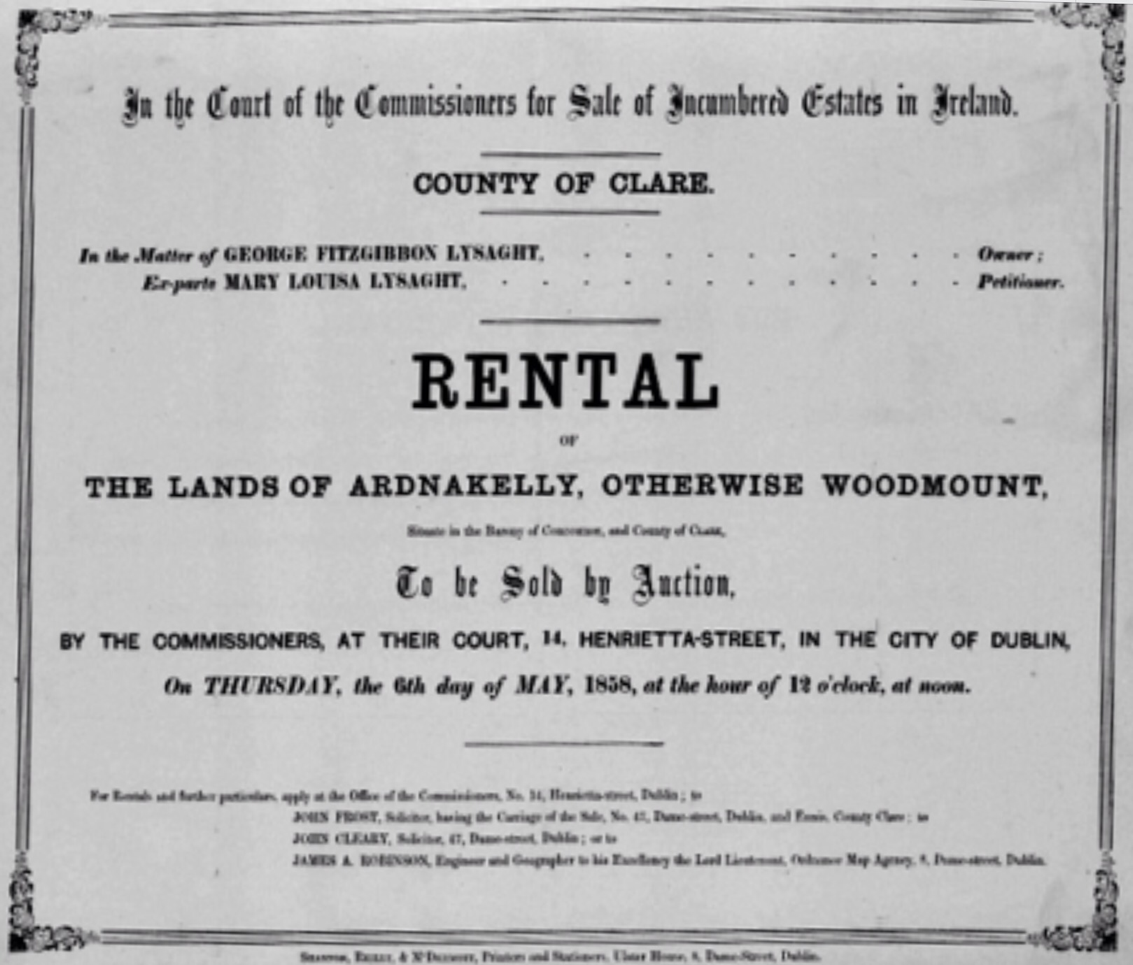
In preparation for these auctions, printed sale-catalogues were circulated to prospective purchasers in advance of the sale. They were compiled with the intention of attracting purchasers and of providing information on the estate in a clear and uniform manner. 

The title page in these sales-catalogues identifies the estate and gives the date for and place of the sale. This is usually followed by brief descriptive particulars of the estate and its situation, intended to attract prospective buyers.

The descriptive particulars are generally followed by observations and conditions of sale.
An example is the sale of the Lysaght estate near Ennistymon - Woodmount.


Here is the Sales-Catalogue-


In addition to owning most of the land in the country, it was no coincidence that these landlords also "owned" most of the local power in their communities.

The Irish landlord class were prominent in local government and virtually controlled the local administration of their counties until 1898.

Sixty-three percent of the great landowners acted as magistrates in their counties. This gave the Irish landlords important judicial power to convict those tried of ordinary crimes at Petty Sessions.

In May 1867, Patrick Edward Reilly was appointed to the Magistracy- the Commission of the Peace for the county of Clare (Justice of the Peace.)

This announcement appeared in the May 9, 1867 edition of the Clare Journal:


THE MAGISTRACY

We feel great pleasure in having to announce the appointment of Patrick Edward Reilly, Esq, Woodpark, Ennistymon, to the Commission of the Peace for the County of Clare, on the recommendation of the Right Hon Lord Inchiquin, Lord Lieutenant of the county. This appointment will be hailed with great satisfaction by the public in the town and the locality of Ennistymon, who much feel the want of anotherlocal magistrate who would permanently reside among them, and no appointment could be made that would give more satisfaction to all parties in the district.

A few days later, on May 18, 1867, this article appeared and it clearly demonstrates the deep respect and esteem in which P.E. was held by his neighbors and his peers:


MEETING AT ENNISTYMON 

On Wednesday, a meeting of the friends of P. E. Rielly (sic), Esq., J.P., was held for the purpose of presenting him with a suitable testimonial on the occasion of his appointment to the magistracy. It is stated that about £130 had been subscribed.

Landlords also dominated the Grand Juries which were responsible for raising money by means of county tax rates. These monies were used to finance a variety of  projects ranging from the construction and repair of roads to the upkeep of hospitals and lunatic asylums.

On June 27, 1838, it was announced that P. E. Reilly had been sworn as a member of the Grand Jury of Galway.


TUESDAY

The Crown business commenced this day at ten o'clock. After the Grand Jury had been sworn, his worship briefly addressed them. On the Bench together with his worship were M.D. Bellow, Esq., Mt. Bellow; A. H. Blake, Esq., Furbo; John Viggnoles, Esq., S.M.; and Malby Crofton, Esq., S.M. The following Jury was immediately after sworn: John Blake, James Cowan. Wm. Kilgannon, Paul Nolan, John Tully, James Hossack, Martin Cullinan, Michael Hennelly, Henry Kelly, Patt Cullinan, James Barrett, and P.E. Reilly.

During the second half of the 19th century, Grand Juries were gradually replaced by the Boards of Poor Law Guardians.

These Boards were composed of both elected members and local magistrates.  Since the majority of magistrates were landowners, this gave them substantial influence.

Patrick Edward Reilly served - and was very active- on the Board of Guardians of the Ennistymon Union from about 1845 - 1867. For details of his service on the Board, please see our Blog Post: P.E, Reilly and the Board of Guardians of the Ennistymon Union. 


As these three appointments illustrate, our great great grandfather fit the criteria of a member of the Irish Landlord Gentry Class in the 19th century.

He was a Magistrate (Justice of the Peace); he was a member of the Galway Grand Jury and he served on the Ennistymon Board of Guardians.

As a solid member of the Landlord Gentry in 19th century Ireland, P.E. Reilly was in the advantageous position to make the most of the Encumbered Estates Act.

In February 1858, he bought land from the estate of the Marquis of Thomond for £1,720.


Three months later, in May, he spent another £1,620 on more property from the estate of the late Marquis of Thomond.


On July 1, 1858, this announcement of available property to be purchased through the Encumbered Estates Court listed Lot 163 which was composed of over 300 acres located near Ennistymon.


Lot 163 was in the area known as Fermoyle Oughters, East, called Knocknakilla. Its 317 acres were held by one tenant who was on a year to year lease.

Patrick Edward Reilly was the purchaser for which he spent £1,170. Its net rent was about £25 - lower than the 1857 Griffith Valuation appraisal of £46.


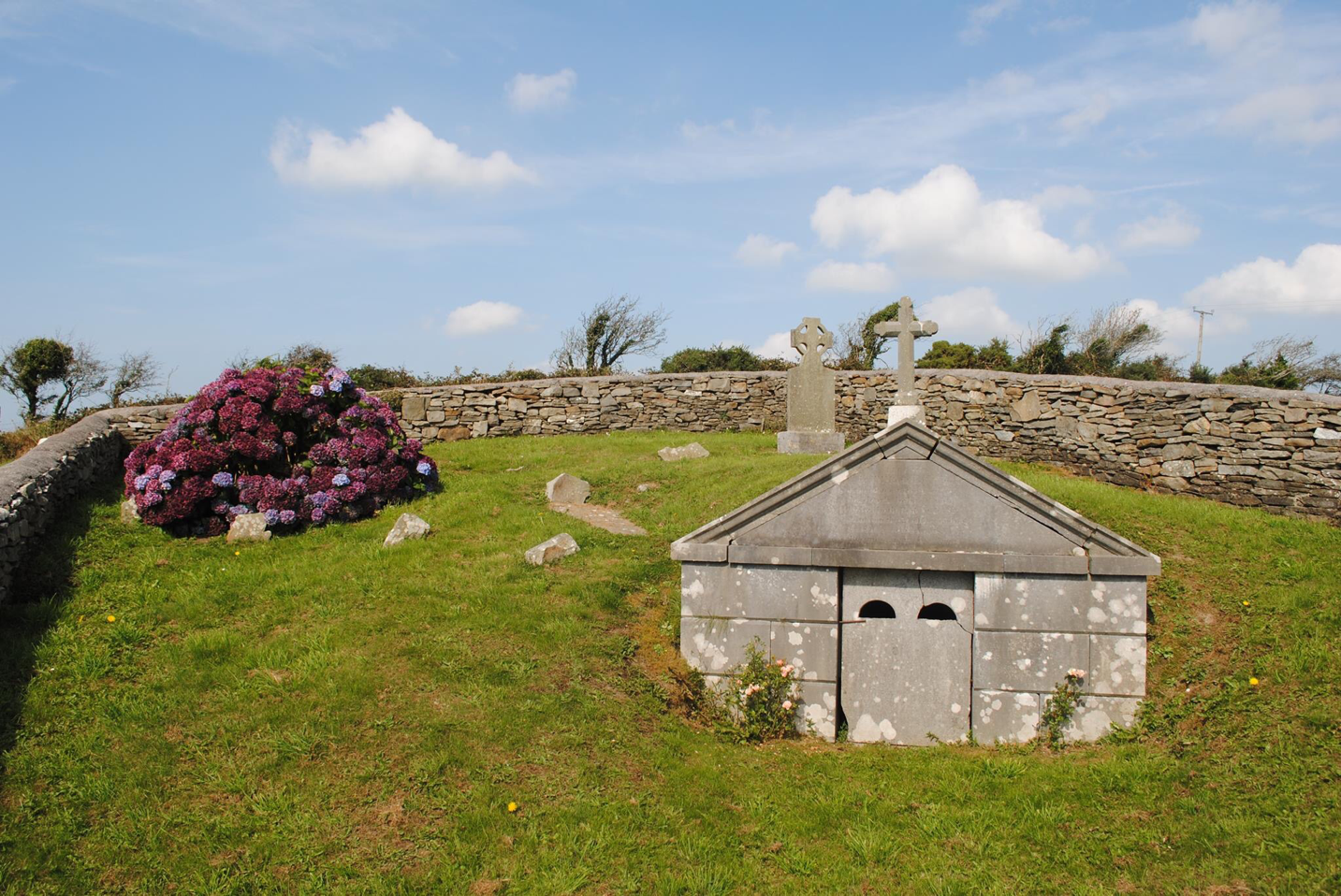
When his wife, Eliza, passed away in 1870, P.E. chose to erect her tomb on his Knocknakilla Cillin property. 


We still have many questions regarding this unique crypt which have yet to be answered. 

We also discovered three properties in Castlebar, county Mayo which P.E. leased out.

In 1857, John Hughes leased a house on Market Street.


P.E. had two other tenants in Castlebar- both were situated on Bridge Street. John Staunton leased "part" of a house and office while Michael Cunniff rented a house with offices, yard and a garage.


These were turbulent times in the West of Ireland, which included Ennistymon. The area was disrupted by violent Land War "outrages" which pitted landlord against tenant.

Although the Land League urged peaceful means of protest, many of the dispossessed peasantry took the law into their own hands and joined a secret agrarian society, headed by the mysterious Captain Moonlight, to attack landlords' property, particularly their livestock.

These attacks, known locally as "moonlighting", in turn prompted reprisals, creating a spiral of violence.

The victims of this agrarian violence were frequently Irish land agents, middlemen, and tenants. Merchants and millers were often threatened or attacked if their prices were high. Landlords' agents were threatened, beaten, and assassinated. New tenants on lands secured by evictions also became targets.

Another secret agrarian society to take up the cause of the peasantry called themselves "The Molly Maguires".

The Mollies (invariably young men) distinguished themselves by dressing in women’s clothing, using powder or burnt cork on their faces, and pledging their allegiance to a mythical woman — Mistress Molly Maguire — who symbolized their struggle against injustice.

The name “Molly Maguire” was based on the story of an elderly woman, reportedly named Molly Maguire, who was turned out of her rental home by an unfriendly landlord, and left to struggle to survive with no shelter; or so the story goes.
For years,  the Mollies left notices on the doors of landlords with threats should they dare to treat their tenants in the same fashion – notes that were signed “Molly Maguire.” It remains unknown if this elderly woman ever actually existed.
However, the Mollies earned worldwide recognition when the “Address of ‘Molly Maguire’ to her children”, was published in Freeman’s Journal, the leading daily newspaper in Ireland, on 7 July 1845. 


"The Address of Molly Maguire to her Children" has been described as a blueprint for civil disobedience.

This "Address" was followed a few weeks later with another letter to the newspaper titled "Molly Maguire's Law".


There has been so much discussion and so much has been published labeling 19th century Irish landlords as despicable, evil, heartless creatures - characterizations which, undoubtedly, was true in some cases. 

Because of this history, it was with great trepidation that I ventured into researching our family history. I didn't know what I would learn about our ancestors.

So it was with much relief and pride that I am discovering the truth about our great great grandfather, the Landed Proprietor.

The infamous Molly Maguires praised Patrick Edward Reilly as one of the "good landlords".

I am concluding this essay with an article which appeared in Friday, November 18, 1859 edition of The Evening Freeman and the Clare Journal:


GREAT REJOICING IN BALLYEA

On Tuesday night last, the tenants on the property of P. E. O'Reilly, Esq which was lately purchased under the Incumbered Estates Court, to mark their thanks and gratitude to that gentleman for his uniform kindness toward them since he became their lamdlord and also to show , in some manner, their feelings towards him who was good enough to promise to all leases of their separate divisions , without any advance on their first agreement , which was in accordance with the valuation of a farmer of their own class and with which they are perfectly content, lit enormous bonfires through the property, kept up dancing and other harmless amusements until the small hours of the morning dispersed them to their separate homes, happy and contented with themselves and their landlord. If this system was adopted by the landed proprietors throughout Ireland what a different tale would the people have to relate; there would be plenty and to spare, if the landlords throughout the country acted as Mr O'Reilly has dome towards his tenants. 

Thank you for reading and please don't be shy about leaving a comment!


EPILOGUE 

History gives a nation its bearing on what it is and how its people are affected by what has happened in the past. 

Its kings and queens, its wars - with victories and defeats - these all mold a nation’s culture into the way it views itself in the present. 

In the same way, a family history presents how a family has survived and come to terms with the great social and cultural experiences of the ages.

We hope these stories will give each member of our family a foundation and, in some small way, explain how we came to be what we are today.

Hopefully, through these vignettes, our future generations will gain a knowledge of the energy and dynamism, the loves and hates, the errors and mistakes, the victories and failures, the struggles and successes that make us what we are.

Our family history presents a fascinating read - and, hopefully, some lessons to be learned in the process.



Saturday, September 2, 2017

From Ennistymon to the Cariboo Wagon Trail Part Two

A few weeks ago, we published the first of a two part post featuring our second cousin, Leopold George Duncan Galwey Foley (1888-1984).


Stories of Leo's life always fascinated my father.

A rebel, an adventurer, a hunter, a miner, an engineer, a hermit, a jeweler, an Army deserter, an Army hero, a curmudgeon- all describe our cousin Leo at various stages of his life.

To catch up, please check out: 


After serving valiantly in World War I - in an albeit unconventional manner - as a Driver of Horse-Drawn Artillery with the Canadian Field Artilly Battalion, we next find Leo on the Eastern Slopes of the Cariboo Mountain Range in British Columbia.


No single event in history did more to create British Columbia than the discovery of gold in the Cariboo Mountains during the 1860s.

This Gold Rush precipitated the chain of events that led to connecting Canada from sea to sea.

When the miners first came to that "uncivilized" country, it had only been known to the indigenous Indians and to the fur traders of the Hudson Bay Company.  

It was a remote and forbidding place. With this onslaught of miners and those businesses which accommodated them, came "Law, Order and Government" on behalf of the British Crown.

Not far from Vancouver, a Hudson Bay fort was established at Yale in 1848.  

With the discovery of gold in 1858, Yale became a roistering mining town. Within a year, over 30,000 people swarmed up the Frazer River. 

Yale was the end of navigation on that part of the River and the beginning of the Cariboo Wagon Road.

The most recent of many "rushes" in the Cariboo Gold Fields was in the 1930s.

About 150 miles north of Yale, Leo entered "Gold Country" near the Quensel Lake.

He first worked in The Bullion Mine near the abandoned mining settlement of Quensel Forks -  the oldest mining camp in the Cariboo Region. 

Today Quesnel Forks is BC's last remaining ghost town, dating back to 1858. 

By the early 1860's, gold fever was rampant at the forks of the Quesnel and Cariboo Rivers and "The Forks" quickly became a rowdy gold camp attracting close to 5,000 people. 

Even after prospectors moved further north, the Forks remained a busy centre until bypassed by the Cariboo Wagon Road. 

By 1875, it became a thriving Chinese community with over 200 merchants and miners. The site had several revivals, but during the 1920's most of the area mines closed and by 1956, it was abandoned.


In 1935, the Bullion Pit became the site of the largest hydraulic monitors ever installed in North America. 

It operated from 1892 to 1942, constructing over 64 kilometres of canals to draw water from nearby lakes and creeks to feed the hydraulic nozzles. 

In fact, Morehead Lake was created to supply water to the Bullion mine. Today, the Bullion Pit stands as an astonishing man-made canyon. 


A forlorn marker now reminds the tourist: "The largest man-made hole on earth."

Leo staked his claim nearby at Likely.


Following in the style of the early placer miners, he sifted through river sand panning for gold nuggets.


In the 1930s, Leo started noticing more and more people coming through the Connaught Tunnel as they followed the Cariboo Wagon Trail. 

Some were trappers; some were ranchers; some were loggers. They came from many different walks of life and they all came prospecting for gold.

Men who prospect, either full or part time, are a breed apart.  

They are happiest when they have mountain ranges to roam, rivers to explore or boulders to bulldoze with the stick of dynamite that was usually hidden under their bed.


The first twenty minutes from Leo's cabin was a downhill hike along a steep footpath through a cathedral of Douglas Fir and Lodge Pole Pines.

The path continued onward  through a hole in a roadside hedge and onto the gravel forest road.

Here, as he would say, the "bohereen" begins. The bohereen is what they call an unpaved, narrow country lane in Leo's native county Clare.

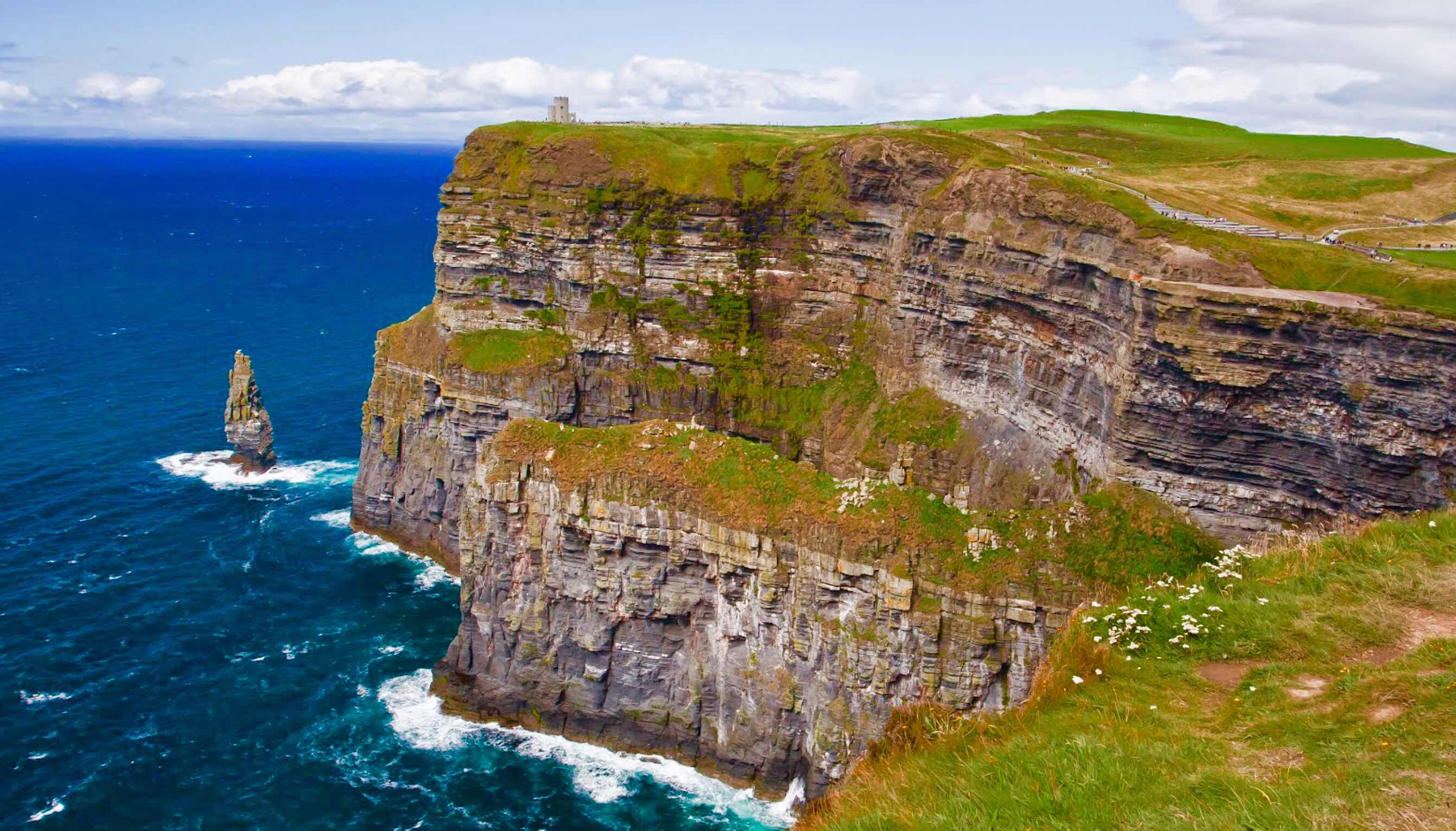
To Leo, this landscape was reminiscent of the famous Slieve Elva in the Burren beyond the village of Lisdoonvarna on the Corkscrew Pass near his birthplace in county Clare.


If you are traveling to this area , you will need to be driving a four-wheel drive jeep - equipped with ropes, shovel, water and an axe - all stored in the "boot".

Road repair crews can only do so much to maintain the next 75 miles in order to keep the road open for most of the year.

However, trekking to Leo's cabin on foot along that gravel road beside the Quensel River Rapids is the more exciting way to make the trip.


In season, bears can be spotted fishing for salmon in the nearby spawning pools. 

Leo recalled once witnessing a nine foot Black Bear tearing at dead trees seeking worms and grubs. 

 Suddenly, he saw two woodpeckers begin diving at him - eventually chasing him off!


During the Depression of The Hungry Nineteen Thirties, Leo's parents had retired in Dublin. About his life in the Cariboo Mountains, his family knew only what Leo chose to reveal in his letters home.

Unbeknownst to them, Leo was "working for the government" three half days a week. 

In this 50s by this time, he worked shoveling and grading the forest roads around Cedar Creek Canyon - many miles off the Cariboo Wagon Trail - to clear a trail through the Canyon - slashing it out - to allow people, hunters and horses to pack through. 


Leo became known as "Tim" among his friends in the Cariboo.

He seems to have spent his long life battling the forces around him.

Leo has been described as 
".... An independent gentleman: secretive, suspicious, 
perhaps a little afraid of life .....
 Maybe not wanting to be hurt anymore...."

For over 25 years, he lived in his one-room log cabin situated on top of a high river bank set 200 feet above the rapids of the Quensel River. Hidden in a cathedral of Douglas Fir, he worked his claim mining for gold nuggets. 

He did find "colors" in his pan - but, not much.

The Mother Lode in the Cariboo has yet to be discovered. But, hope springs eternal that the newly found casual scuff of rock might turn up the Big Nugget that had been missed by the thousands of previous hunters.

In his own way, Leo was a colorful and unique miner.

As he faced advancing age and ill health, a group of loyal friends - big-hearted Cariboosters- eventually prevailed upon the weakened, independent- minded old son of an Irish gentleman.

They were able to convince him to come down from his embattled mountain retreat to find sanctuary with them in the nearby town.

In 1980 at age 92, Leo was the oldest resident at The Cariboo Lodge on Williams Lake to win the Annual Walkathon Challenge against Dunrovin Lodge in Quesnel.

To participate in the Challenge, entrants were required to walk at least thirty minutes a day - for 142 days. Each day represented a kilometer. 142 days equaled 142 kilometers which is the distance between the two Lodges.

At Williams Lake, about 75 miles from the claim he had staked and mined alongside the Cariboo Wagon Trail at Likely, the marker on Tim's grave reads:

+ Galwey Foley, Leo (Tim) 1887-1984
Rest in Peace.

APPENDEX

April 4, 2018

The Archivist at Blackrock College, Ms Carolyn Mullen, was kind enough to send me the following story which she found in the Galwey-Foley Files at the College.

Although this indicates that Leo might have been a Blackrock student, there are no records on file for him.


EPILOGUE 

History gives a nation its bearing on what it is and how its people are affected by what has happened in the past. 

Its kings and queens, its wars - with victories and defeats - these all mold a nation’s culture into the way it views itself in the present. 

In the same way, a family history presents how a family has survived and come to terms with the great social and cultural experiences of the ages.

We hope these stories will give each member of our family a foundation and, in some small way, explain how we came to be what we are today.

Hopefully, through these vignettes, our future generations will gain a knowledge of the energy and dynamism, the loves and hates, the errors and mistakes, the victories and failures, the struggles and successes that make us what we are.

Our family history presents a fascinating read - and, hopefully, some lessons to be learned in the process.